
The Crypt
The Crypt
The Crypt
Audio transcription
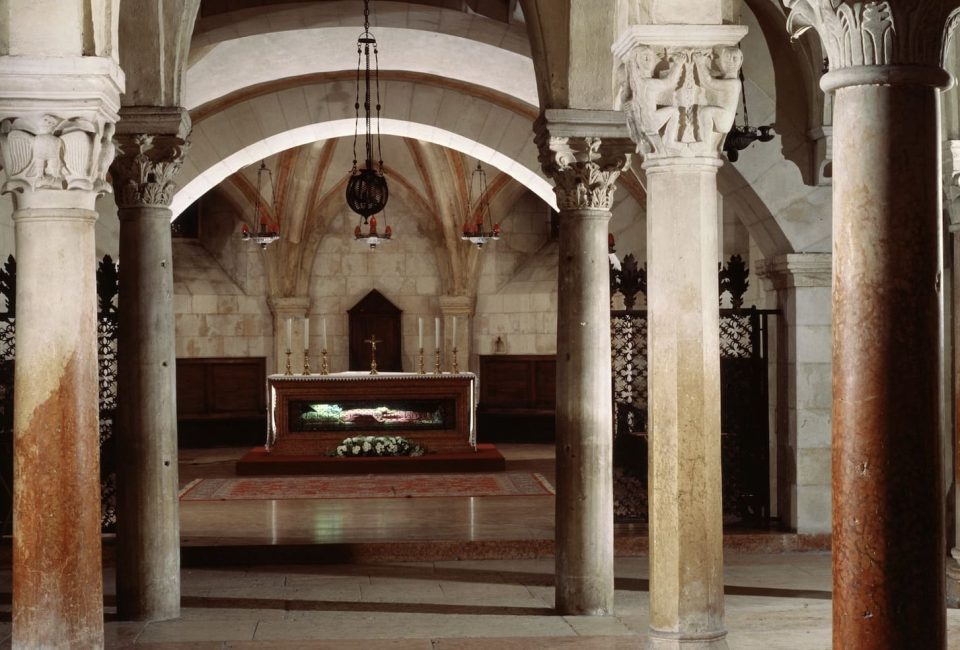
As you go down the central staircase you enter the crypt, which houses the remains of the patron saint. The huge crypt dates back to the 10th century, but was restored in the 13th century, the mid-sixteenth century and again in the centuries that followed. The five entrance arches were richly decorated by Adamino da San Giorgio at the beginning of the 13th century.
The interior is subdivided into nine straight naves by 49 columns with Roman and Romanesque capitals, each being different from the others. Many capitals are decorated with expressive, popular motifs that resemble certain bronze images by the First Master of the portal. Between the slender columns you can see the mighty “roots” of the upper church’s pillars and columns. On the walls there are traces of frescoes in the style of Giotto. The lamps hanging from the cross vaults in honour of the saint were offered by the Vicariate of the Diocese of Verona. At the far end there is an apse enclosed by a gate, and inside there is an urn containing the remains of St. Zeno. Every year during the month of May, celebrations are held in honour of the saint, particularly on the 21st of May when a solemn procession finishes in the crypt. It is led by the Bishop of Verona and the Abbot who, together with the mayor and civil authorities, pay homage to St. Zeno. The sarcophagus of Saints Lucillo, Lupicinus and Crescenziano is also preserved in the crypt, now situated in front of Mantegna’s triptych as a high altar. In addition to the remains of Saints Cosmas and Damian, the crypt also houses relics of the bishops Procolo and Agabio, and, to the left, those of Eupreprio – the first Veronese bishop – and Cricino, the predecessor of Zeno.