

Historical outline
Historical outline
Historical outline
Audio transcription
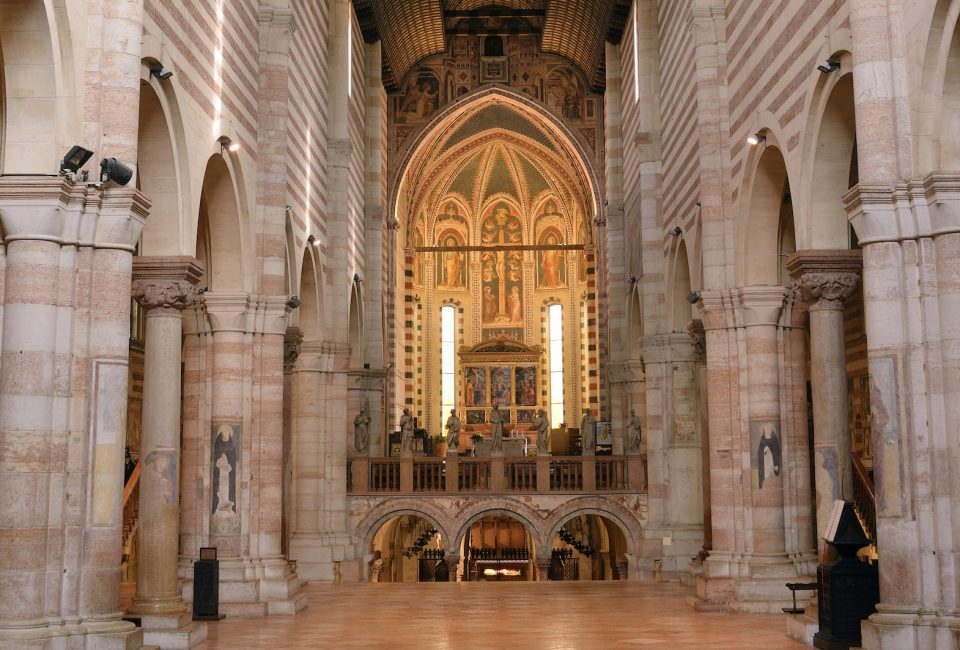
The Basilica of San Zeno is a splendid example of Romanesque art. The building is located in an ancient Roman cemetery. The original core of the complex was a monastery built on the burial site of St. Zeno, the eighth bishop of Verona who lived in the second half of the 4th century. He is considered to be the person who converted the town to Christianity and is the patron saint of Verona. As devotion to St. Zeno spread, the church was no longer big enough. For this reason, between 805 and 806 AD, the Frankish king, Pepin (son of Charlemagne), the Bishop, Ratold, and the Archdeacon, Pacificus, built a great basilica with an adjoining monastery.
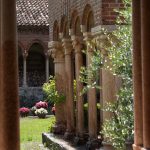
On the 21st of May 807 AD, the relics of the holy bishop were transferred to the church by two hermit saints named Benigno and Caro. Terrible barbarian invasions followed, and as a result of the destruction wrought by the Hungarians, rebuilding of the basilica started in 963 AD. It was a church with three naves, three apses and a crypt. At the end of the 11th century, the basilica was enlarged and renovated again, with almost all of the current structure being attributed to work of that period. The terrible earthquake of 1117 compromised much of the work already done; the cloister, the upper part of the bell tower, and some areas of the monastery collapsed. The works, which were resumed immediately after the earthquake, continued up until 1138 AD. The basilica was extended and completed with the facade and porch by Nicholaus. The bell tower was completed in 1178 and the contribution of the 13th century master Brioloto, along with Adamino da San Giorgio, produced the elevation of the facade and the inclusion of the rose window between 1217 and 1225. The cloister was renovated in 1313. 1387 saw the refurbishment of the apse and the wooden ceiling, which was similar to a ship’s hull. Their completion involved the raising of the central nave walls. In 1870 the great 16th century staircase connecting the upper church with the main church was demolished, and in its place the current lateral and central stairs to the crypt were constructed. In 1770, the San Zeno complex ceased to exist as a monastery, according to the will of the Venetian Republic.